
The Roman Crowd’s Changing Judgment
Quo VadisThis flow follows the populace from curiosity and hostility to moments of compassion that limit imperial violence.
increasing Bearing strength in each event
 decreasing
Bearing strength in each eventdecreasingCuriosity at the Palace

Curiosity at the Palace
Power consumed as spectacle
The crowd watches Nero’s retinue, clothing, and ceremonies with fascination, mixing admiration with mockery.
A volatile relationship
The people enjoy imperial displays but retain the ability to insult and pressure the ruler.
Anger at the Fire

Anger at the Fire
Loss seeks responsibility
The displaced population hears reports that Rome may have been burned on Nero’s orders.
A volatile crowd gathers
Grief, hunger, and suspicion bring the city close to open violence against the imperial party.
A Slogan Calms the Mob

A Slogan Calms the Mob
Promises answer immediate need
Petronius promises bread, gardens, and games, turning a dangerous crowd toward demands for provision.
Public power becomes visible
The emperor must respond to the population’s anger rather than simply command it away.
The Martyrs Disturb Spectators
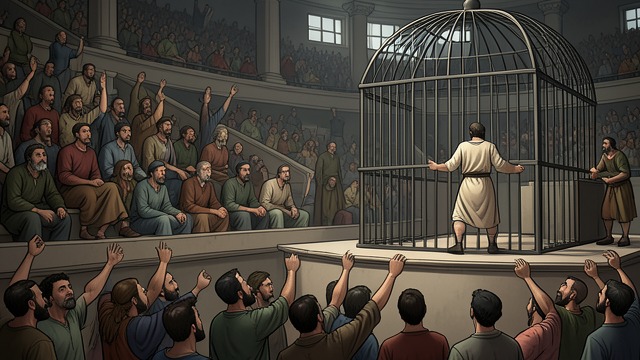
The Martyrs Disturb Spectators
Victims refuse the expected role
Christians sing and pray rather than pleading, confusing the audience’s expectation of condemned criminals.
Pity competes with appetite
Some spectators begin to feel discomfort even as the games continue.
A Demand for Mercy

A Demand for Mercy
Sympathy becomes collective action
The crowd demands that Lygia and Ursus be spared after witnessing the rescue.
Nero yields under pressure
The people’s shared judgment prevents the planned execution and turns a spectacle into an act of public resistance.
During Nero’s public entrance and feasts
During the Great Fire and its aftermath
During Petronius’s address beneath the aqueduct
During the first arena executions
At Ursus’s victory over the aurochs
